
L’infarctus ST+ de certains patients est diagnostiqué parfois plus de 12 heures après le début des symptômes. On parle d’infarctus subaigu ou tardif (late acute STEMI). Leur pronostic est moins bon [1].
Affirmer le caractère récent, tardif voire ancien d’un infarctus est difficile sur l’ECG seul. Qu’en pensez-vous ci-dessous ? La clinique et la biologie sont indispensables, mais elles ont des limites (ex. douleur intermittente).
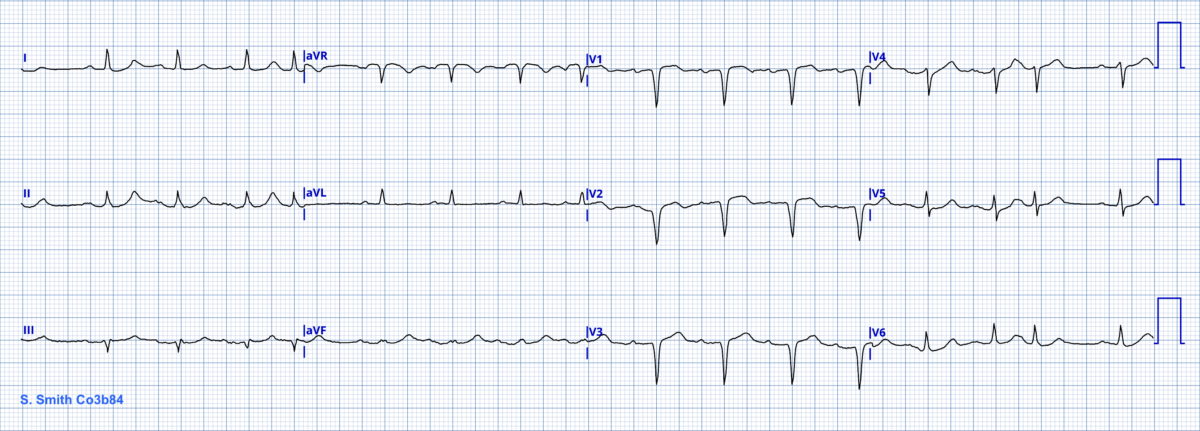
En règle générale, si le patient a encore une douleur ou des troubles du rythme, le bénéfice d’une revascularisation d’urgence existe. Néanmoins, la disparition des symptômes est mal corrélée avec l’absence d’ischémie coronaire. Une investigation coronaire (routine PPCI strategy) et au besoin une revascularisation coronaire sont recommandées jusqu’au deuxième jour inclus (Byrne et al, ESC 2023, classe IIa [2]).
Au-delà de 48 heures l’intérêt d’une revascularisation doit être discuté au cas par cas (intérêt de l’IRM ou de la scintigraphie) [3].
Signes ECG
L’aspect ECG varie considérablement d’un patient à l’autre, mais certains signes électriques permettent d’estimer que l’infarctus ST+ est vu à un stade tardif.
- Le segment ST+ perd son amplitude et sa convexité, s’aplatit et devient descendant dans sa partie terminale.
- Le segment ST- en miroir s’estompe et peut disparaître.
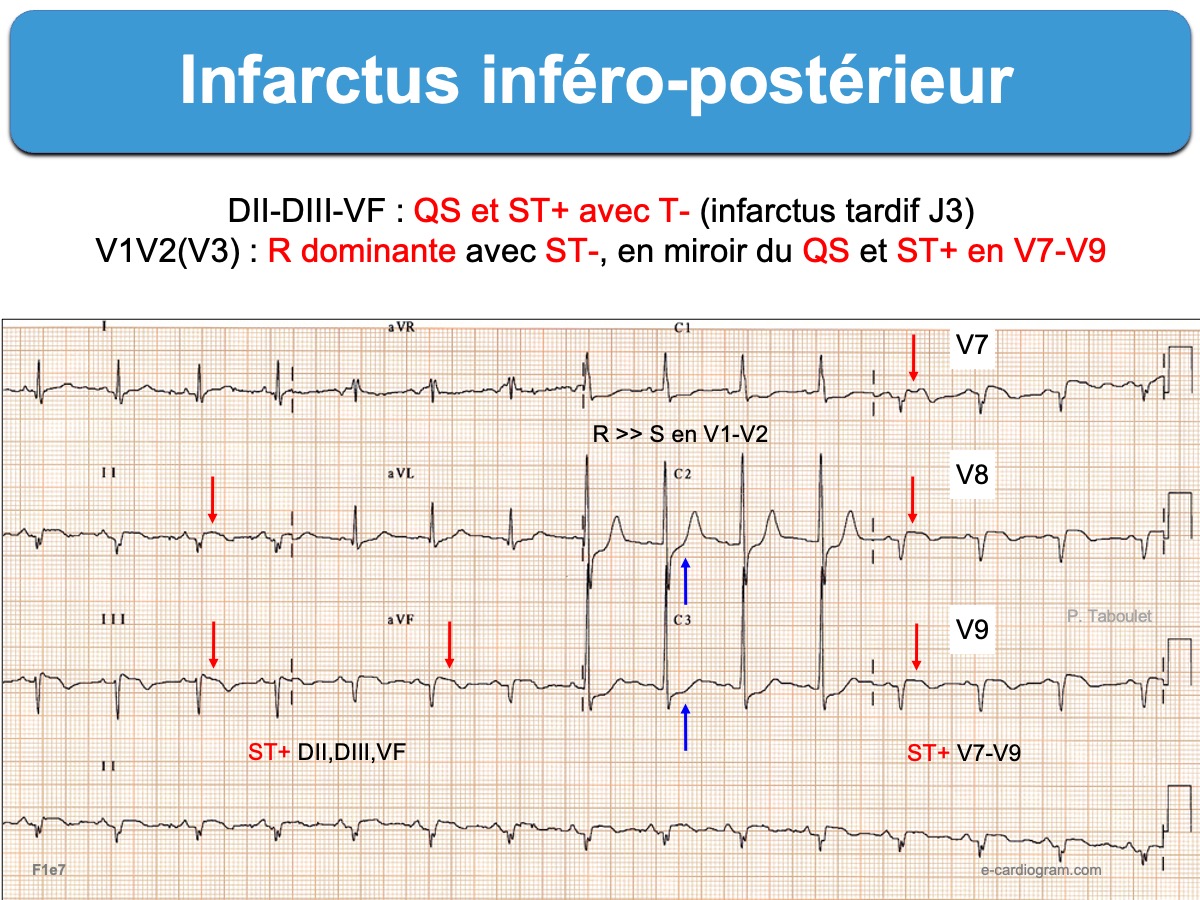
- Les ondes Q sont profondes et larges avec souvent un aspect QS (cf. Ondes Q de nécrose) ou un rabotage des ondes R et un ratio Q/R est > 1.
- Les QRS perdent leur amplitude et deviennent plutôt bas voltés/microvoltés.
- Les ondes T s’inversent avec un ratio T/ST ≥ 1. Elles peuvent être inversées profondément ≥ 10 mm, englobant une onde U négative et allongeant le QTc (cf. Ondes T inversées).
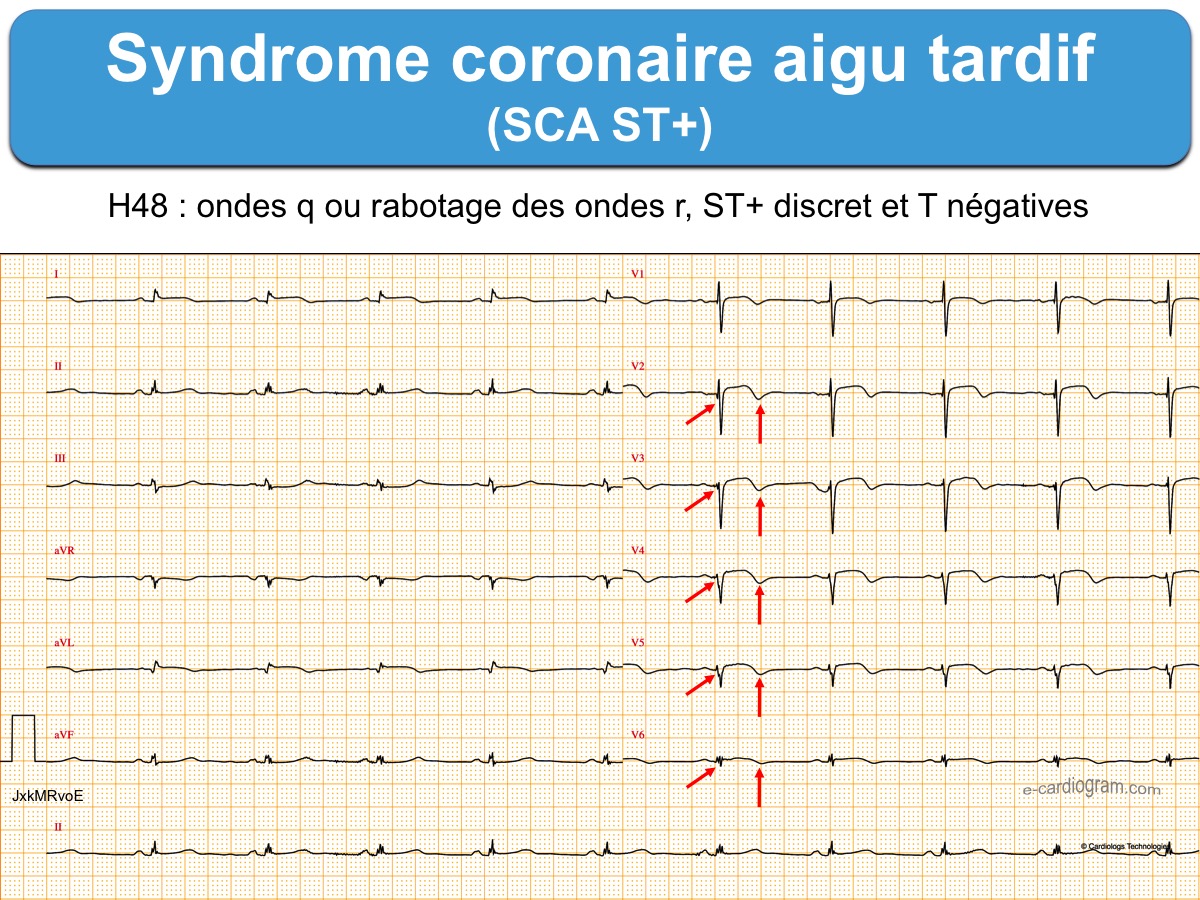
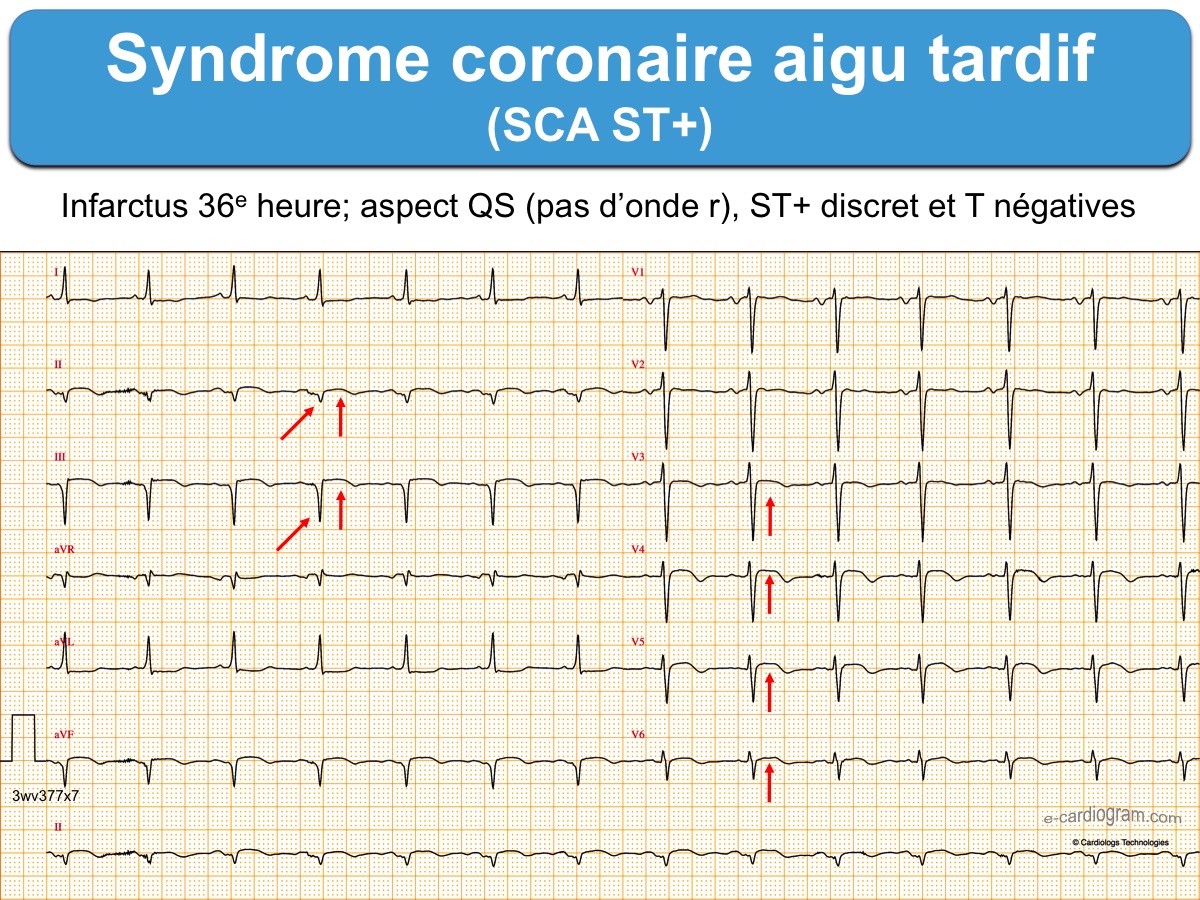
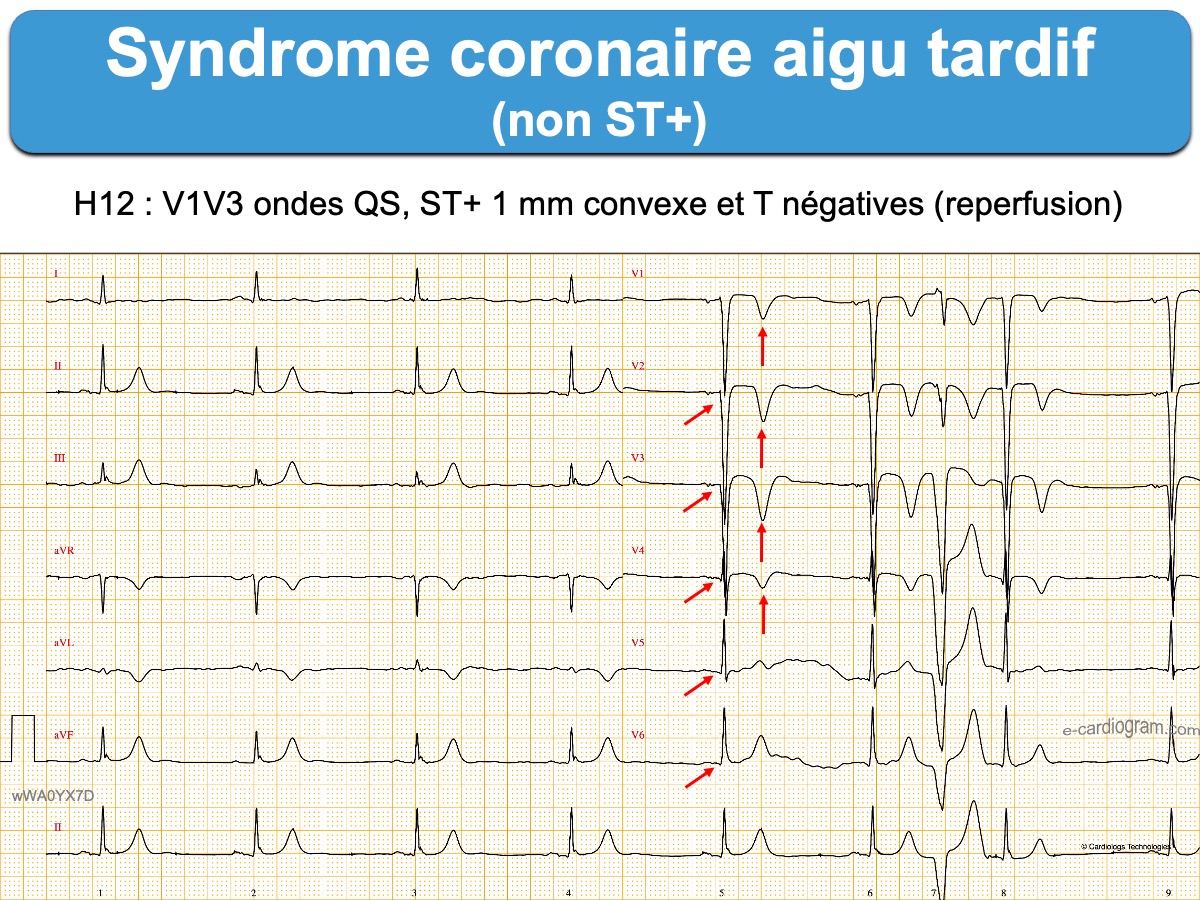
Infarctus vu tardivement (douleur thoracique depuis 2-3 jours)
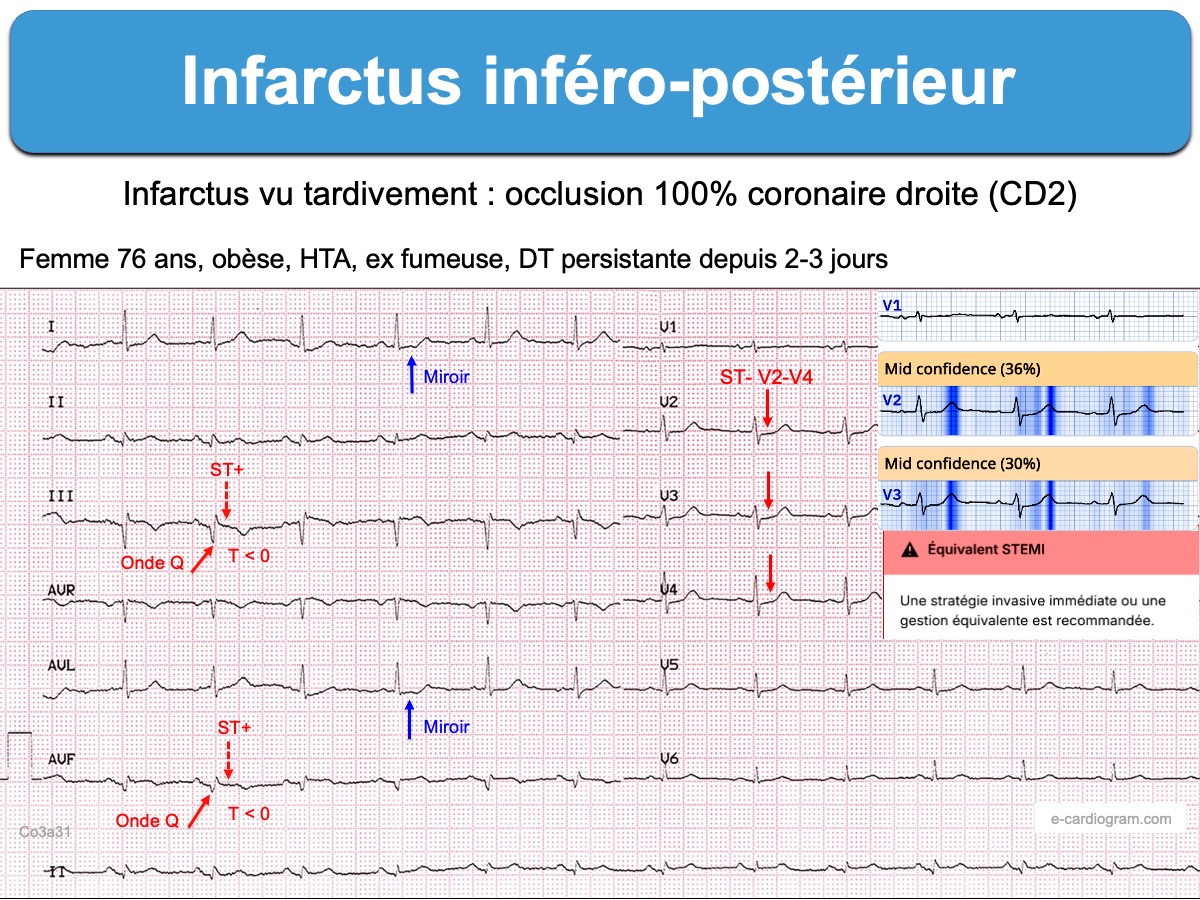
Infarctus vu tardivement (trois jours après le début des douleurs)
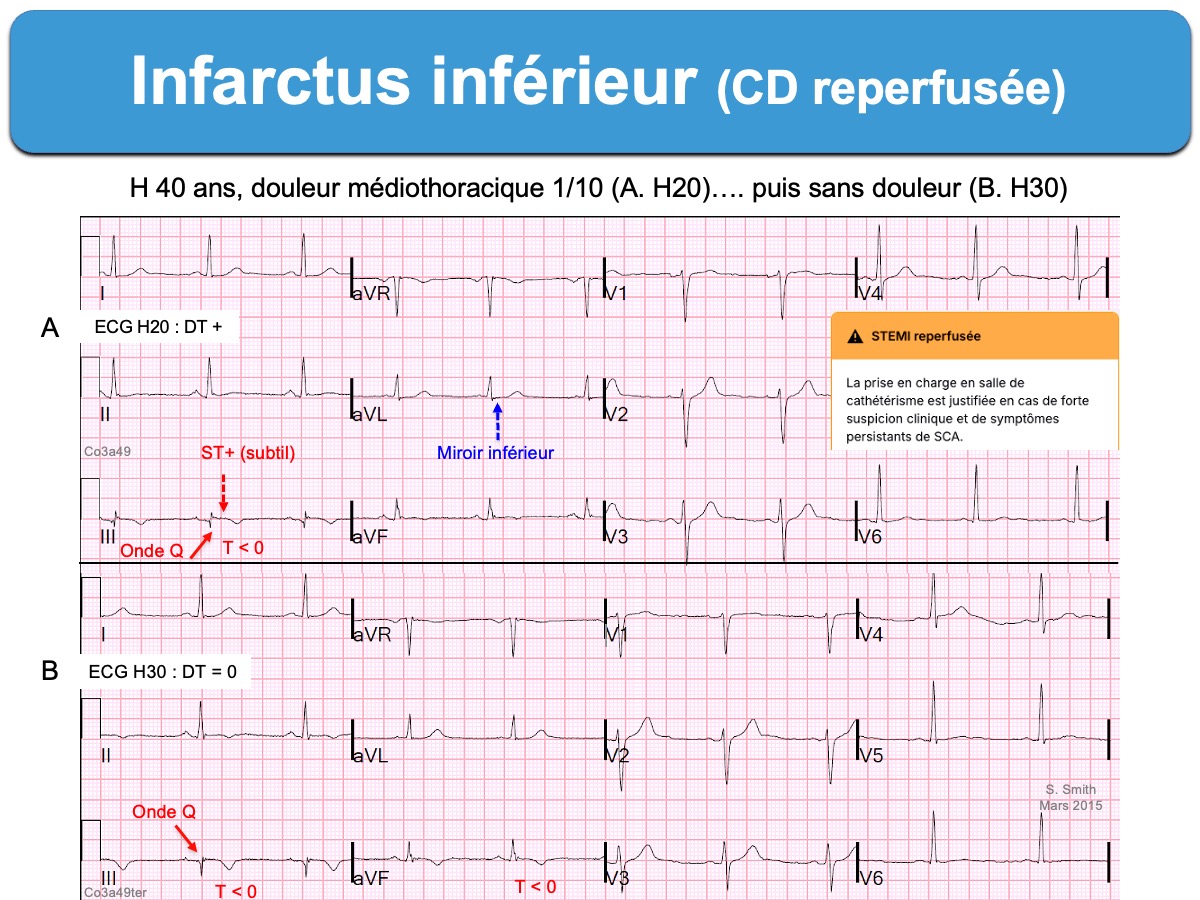
Homme 40 ans, douleur médiothoracique (A. H20)…. Puis amélioration (B. H30). Blog S. Smith
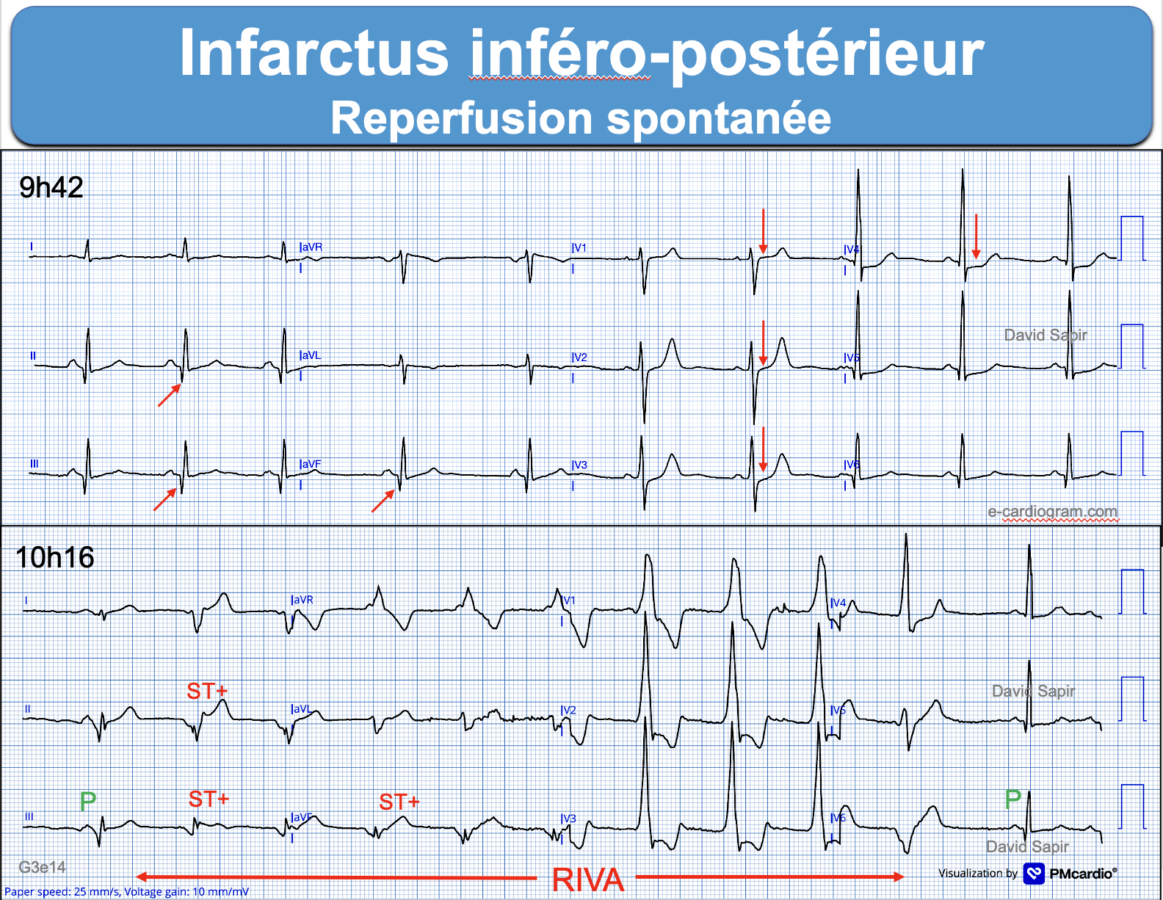
- Un rythme idioventriculaire accéléré peut apparaitre, en faveur d’une reperfusion coronaire spontanée.
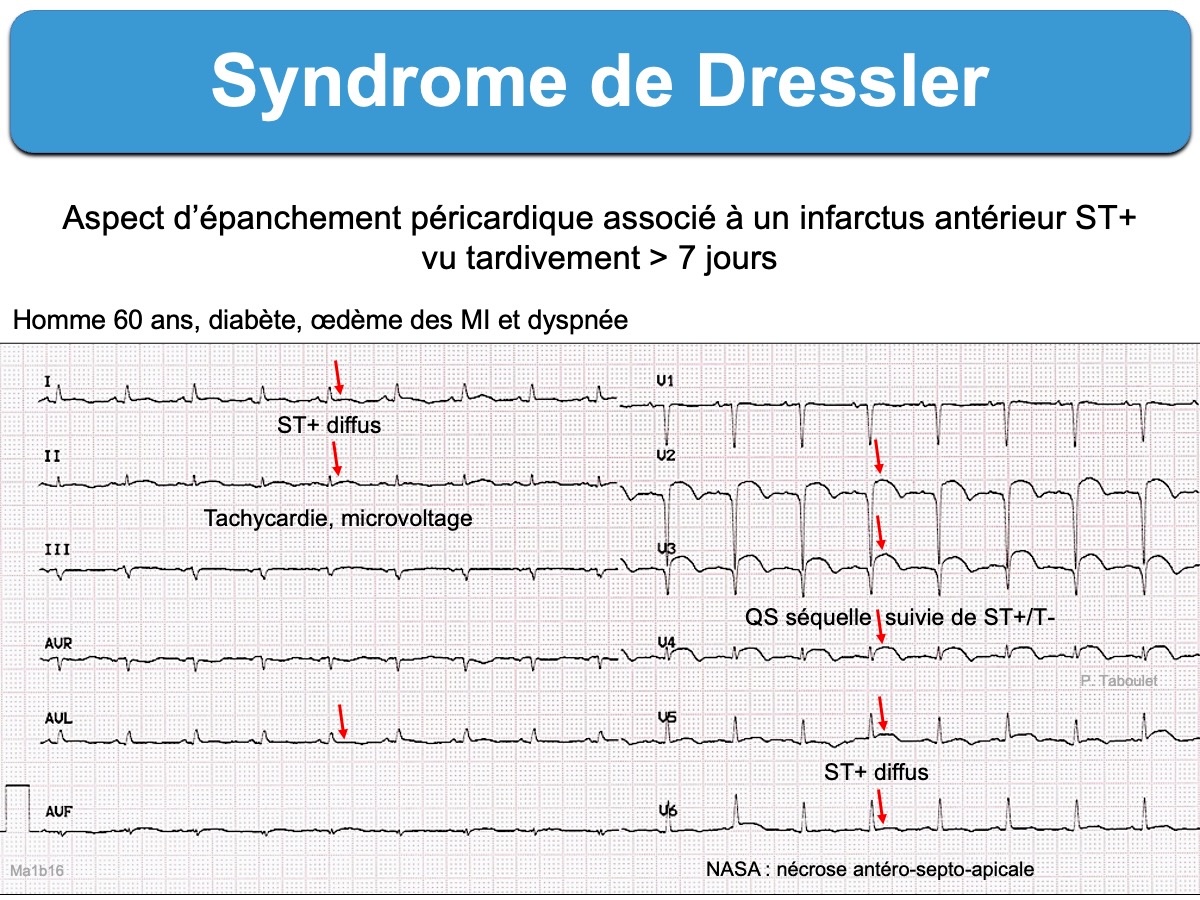
- Des signes de péricardite liquidienne peuvent apparaitre (cf. Syndrome de Dressler).
Vidéos sur YouTube (voir liste ici)
- PT, dec 2022, 59 min : Pourquoi le diagnostic ECG d’un infarctus (SCA) est difficile ?
Blog S. Smith
- Solution du Quiz de début chapitre : nov 2026. 80-something-with-h-o-inferior-omi-presents-with-12-hours-of-chest-pain
Diagnostics différentiels
Faîtes des quiz sur le site web (plusieurs niveaux de connaissance 1 à 3).
Ex : Coronaropathie 2
Si vous souhaitez améliorer ce contenu, merci de me contacter
Références pour les abonnés premium
[1] Cerrato E, Forno D, Ferro S, Chinaglia A. Characteristics, in-hospital management and outcome of late acute ST-elevation myocardial infarction presenters. J Cardiovasc Med (Hagerstown). 2017;18(8):567-571 A total of 1372 patients were included, 147 (10.8%) were lateSTEMI. In ICCU lateSTEMI patients compared with STEMI patients experienced more frequently heart failure (75, 51.2% vs. 298, 24.3%; P < 0.001), atrial fibrillation (26, 17.7% vs. 130, 10.6%; P = 0.011), complete atrioventricular block (16, 10.9% vs. 63, 5.1%; P = 0.005), stroke (5, 3.4% vs. 5, 0.4%; P < 0.001), myocardial rupture (6, 4.1% vs. 3, 0.2%; P < 0.001), with higher administration of noninvasive ventilation support therapy (13, 9.8% vs. 44, 3.6%; P = 0.001) and the intra-aortic balloon counter-pulsation use (14, 10.3% vs. 102, 8.3%; P = 0.038). Intrahospital mortality was significantly higher in the lateSTEMI group (19, 13.4% vs. 69, 5.6%; P = 0.001).
[2] Byrne RA, Rossello X, Coughlan JJ, et al; ESC Scientific Document Group. 2023 ESC Guidelines for the management of acute coronary syndromes. Eur Heart J. 2023 Oct 12;44(38):3720-3826. (téléchargeable)
5.2.1.1. Invasive strategy in ST-elevation myocardial infarction late presenters … While routine immediate angiography and PCI (if indicated) are clearly associated with clinical benefit in patients presenting within 12 h of symptom onset, the value of a routine PPCI strategy in STEMI patients presenting later than 12 h after symptom onset is less well established
A routine PPCI strategy should be considered in STEMI patients presenting late (12–48 h) after symptom onset (Recommendation Table 4 — Recommendations for reperfusion therapy and timing of invasive strategy classe IIa)
Ibanez B, James S, Agewall S, et al; ESC Scientific Document Group. 2017 ESC Guidelines for the management of acute myocardial infarction in patients presenting with ST-segment elevation: The Task Force for the management of acute myocardial infarction in patients presenting with ST-segment elevation of the European Society of Cardiology (ESC). Eur Heart J. 2018 Jan 7;39(2):119-177. (téléchargeable). A routine primary PCI strategy should be considered in patients presenting late (12–48 h) after symptom onset Therefore, routine PCI of an occluded IRA in asymptomatic patients > 48 h after onset of symptoms is not indicated
[3] Alkhalil M, Choudhury RP. Reperfusion Treatment in Late Presentation Acute Myocardial Infarction. Circ Cardiovasc Interv. 2018;11(9):e007287 (téléchargeable).